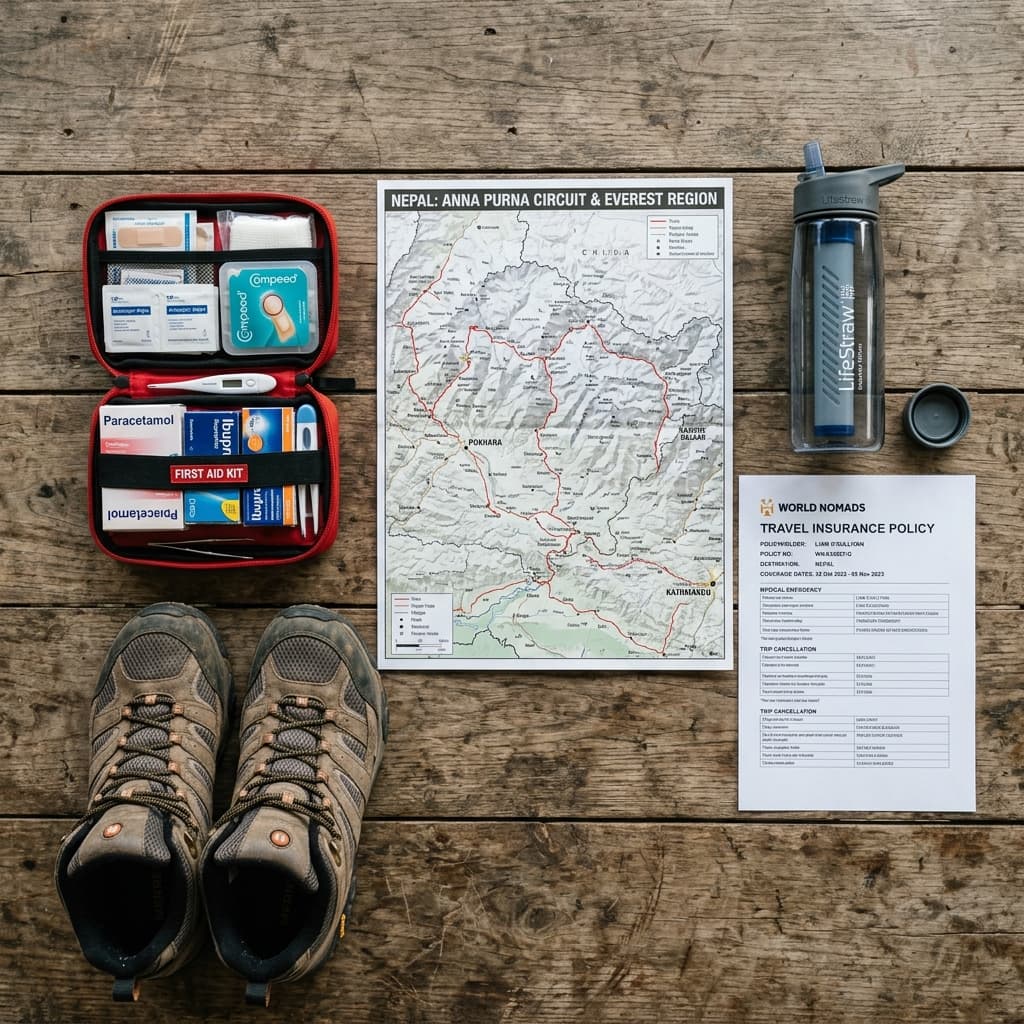
Living and working in Nepal is an adventure of a lifetime. However, because of the unique geography, high altitudes, and developing infrastructure, remote workers need to pay close attention to their health and safety.
Here are the top 5 essential health and safety tips to ensure your digital nomad experience in Nepal remains smooth and worry-free.
1. Master Water Safety (The Gold Rule)
Never drink tap water in Nepal, even in high-end hotels. Waterborne illnesses are the most common health issue for expats and travelers.
- Avoid Raw Tap Water: Use bottled mineral water for drinking and brushing your teeth.
- Eco-Friendly Option: To reduce plastic waste, purchase a water bottle with a built-in filtration system (like Lifestraw or Grayl) or use UV purification pens.
- Salads & Ice: Be cautious when ordering raw salads or drinks with ice in budget restaurants, as they may have been washed or made with tap water.
2. Altitude Sickness Awareness
If you take advantage of working remotely by going on weekend mountain treks, you must respect the altitude. Acute Mountain Sickness (AMS) can affect anyone above 2,500 meters (8,200 feet).
- Ascend Slowly: Do not trek more than 300-500 meters of elevation per day once you pass 3,000 meters.
- Stay Hydrated: Drink plenty of water and avoid alcohol when climbing.
- Carry Medication: Pack Diamox (acetazolamide) after consulting a local clinic, and descend immediately if you experience severe headaches, dizziness, or nausea.
3. Protect Against Air Pollution in Kathmandu
Kathmandu is surrounded by hills that trap dust and exhaust fumes, leading to poor air quality, particularly during the dry winter season (November to February).
- Wear a Mask: Use a high-quality N95 mask when walking along busy roads or riding motorbikes.
- Get out of the Valley: If the pollution gets to you, take a week to work from Pokhara, Bandipur, or Dhulikhel, where the air is much cleaner.
- Air Purifiers: If you rent an apartment long-term, consider buying a small indoor air purifier for your workspace.
4. Get Comprehensive Nomad Travel Insurance
Standard travel insurance often excludes high-altitude trekking or helicopter search and rescue. Ensure you have specialized insurance before you arrive.
- Recommended Insurance: SafetyWing is highly popular among digital nomads for its flexible monthly subscription.
- Trekking Add-on: If you plan to hike above 3,000 meters, make sure your policy covers high-altitude hiking and emergency helicopter evacuation, as rescue operations in the Himalayas are extremely expensive.
5. Know the Best Clinics for Expats
If you do fall ill, Nepal has excellent private clinics with Western-trained, English-speaking doctors.
- Kathmandu: Head to CIWEC Hospital (Lainchaur) or ERA Health (Lazimpat). Both specialize in travel medicine and work directly with international insurance providers.
- Pokhara: CIWEC Hospital Pokhara (Lakeside) offers the same high standard of care right next to the nomad hub.
By following these basic guidelines, you can stay healthy and energized, allowing you to fully enjoy everything the beautiful country of Nepal has to offer.
Related Posts


Get the Free Nepal Nomad Starter Kit
Weekly tips + free PDF guide describing cost of living, visa hacks, and the best coworking spots.